
Forget cutesy coffee dates, our love story began with a full-on brawl in business communication class. Yeah, you heard that right, a brawl.
Except instead of throwing fists, we were hurling insults (well, mostly me defending glorious Tamil icons like Kamal Haasan or AR Rahman).
Tanuj, came at me with Bollywood’s grandeur, epic dance sequences, and the unmatched charisma of Shah Rukh Khan. I, on the other hand, schooled him on the intricate storytelling, emotional depth, and the side-splitting dark humor that Tamil movies bring to the table. The class turned into a cheering section, equally divided between North and South.
By the end of it, we were both breathless, not from anger, but from the sheer thrill of finding someone who could match our passion for movies (and maybe win me over with that North Indian charm).
Our dates were basically cultural exchange programs.
He introduced me to the Bollywood dream world, where every scene felt like it belonged on the cover of a travel magazine, and I showed him the raw, real stories of Tamil cinema, where characters felt like they could be your next-door neighbor.
One day, I dragged him into watching “Naanum Rowdy Dhaan,” determined to witness his reaction to the perfect blend of humor and heart.
Let’s just say, I spent more time watching him than watching the movie. The way his eyes lit up as he laughed at Vijay Sethupathy’s comic timing and expressions? Pure magic.
By the end, he was not only a fan of the movie but also conceded that Tamil films win hands down for date nights. Score one for the South!
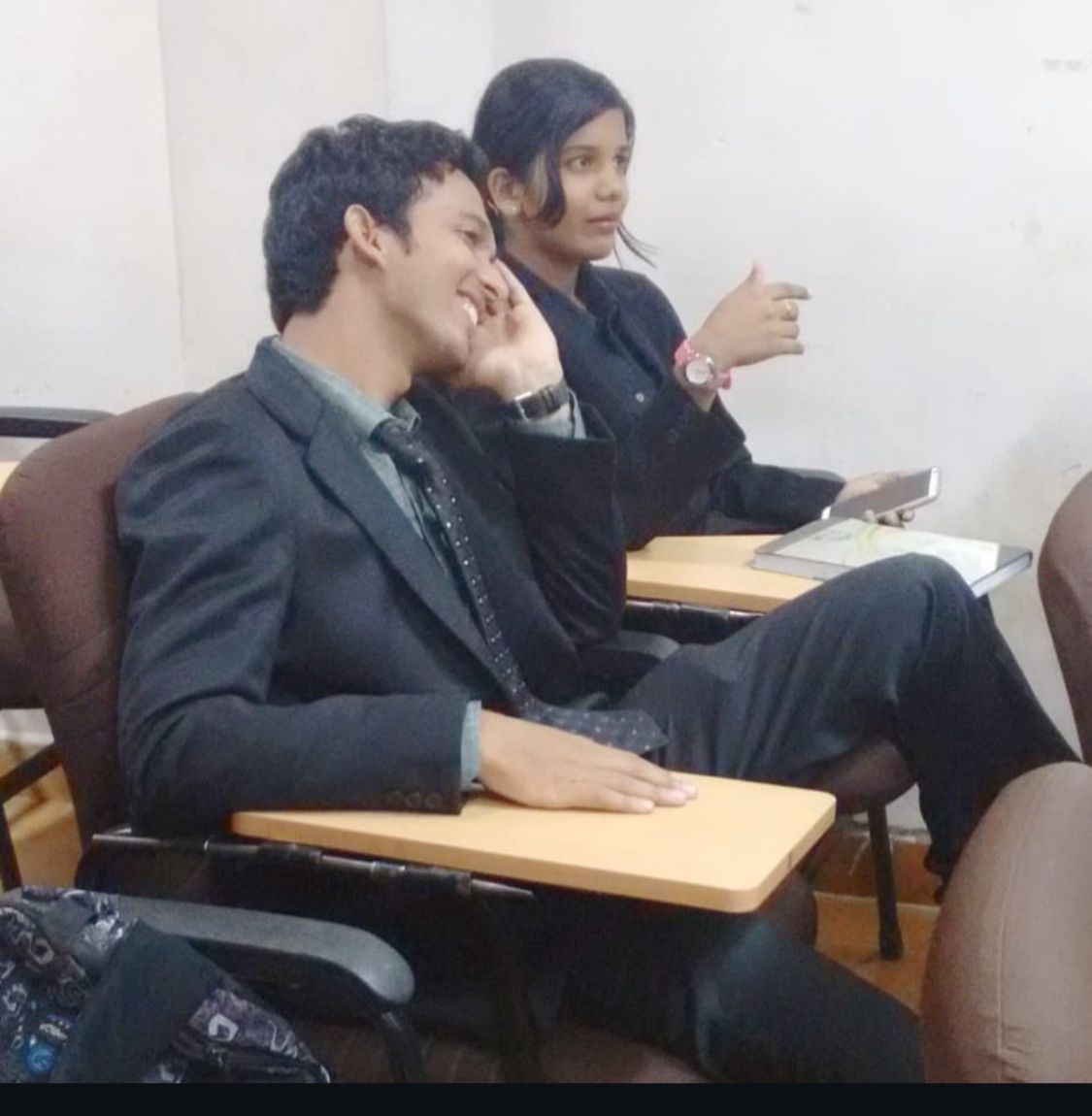
We were and still are – like a living meme – the “North-South Duo.”
Tanuj, the ultimate gamer dude, would try (and fail) to explain his virtual world conquests, while I’d launch into dramatic narrations of my novels, complete with over-the-top accents and Bollywood-worthy theatrics.
Our friends loved it (or maybe just pretended to).
But honestly, beneath the playful jabs, there was this deep respect for each other’s roots.
It wasn’t always smooth sailing, though. Imagine a rollercoaster with unexpected turns, like trying to navigate the landmine of festival traditions.
Picture Pongal mornings at my place in Madurai, where Tanuj resembled a baby giraffe attempting ballet as he tried to walk past the fresh white kolam made by my mom.
Holi at his place was equally chaotic, with me ending up looking like a human paint palette.

But through the laughter and occasional cultural mishaps, we found our rhythm.
We built our own world, a crazy beautiful blend of North and South, of me and Tanuj.
It’s messy, it’s hilarious, it’s absolutely us, and every day is an adventure.
Love – I guess – like biryani, is all about the perfect blend of spices, and that’s what keeps us going.
Home is Where Both Hearts Are: Creating a Harmonious Intercultural Home
Creating a harmonious intercultural home isn’t just about blending languages or food preferences; it’s about merging two completely different worlds and somehow keeping the peace. It’s like trying to mix oil and water and getting champagne. As a Tamil novelist married to a North-Indian gamer, let me tell you: it’s an adventure filled with sass, wit, and a sprinkle of sarcasm.
Step 1: The Battle of the Decor
Who knew throw pillows could be so divisive?
Last year we bought our first home together, and we haven’t fully finished the decor on it. We tell everyone it’s because our kids are very small and it would be hard to maintain (our son is 1, and our daughter 3). But the real reason is this: we have COMPLETELY different taste.
Tanuj likes to keep things minimal, sleek and empty, while I ABSOLUTELY REQUIRE MY PLACE OF RESIDENCE TO LOOK LIKE A MAXIMALIST MANSION OF A WIZARD WHO HAS COLLECTED GLORIOUS ARTIFACTS ON HIS MANY MANY QUESTS AROUND THE WORLD.
Even in our current, pre-interior phase, where we are doing soft temporary decor to the place, I lean towards Tamil-inspired decor: think elegant Thanjavur paintings and muted earth tones—my husband believes a room isn’t complete without at least three posters of his favorite games, preferably in neon.
The solution? Compromise.
Our living room now boasts a charming mix of cultural artifacts and geeky gaming paraphernalia. The Thanjavur painting shares wall space with a Valorant poster.
It’s like our very own cultural collision exhibit. It’s as if the Louvre and Comic-Con had a love child.
One weekend, we found ourselves debating the merits of a large five foot traditional brass lamp versus a replica of a Halo energy sword.
We ended up with both: the lamp on the coffee table and the sword mounted above the TV.
Our home is where Lord Vishnu and Master Chief coexist peacefully.
Step 2: Culinary Chaos
In our kitchen, we dance to the beats of a culinary clash.
He likes his food softand tangy, straight out of a Punjabi dhaba, while I prefer the sharp flavors of Sourthern Tamil Nadu cuisine. Our spice rack looks like a battlefield—turmeric, peppercorns and cumin on one side, chole masala and garam masala on the other.
We resolved this by hiring a cook who works on a schedule that alternates between both our favourites the entire week. This was truly challenging to do so in our Delhi home. Finding a cook who can make a simple paruppu thovaiyal in Delhi was challenging.
But in our Bangalore apartment it was easy to find a cook who can make both delicious North Indian dinners and spicy tamil food.
On my week, it’s all about sambar, rasam, poriyal, thovaiyals and dosas. His week features butter paneer, parathas, and the occasional experimental fusion dish that we both pretend is not horrifying.
Our kids, meanwhile, have developed palates that could survive an episode of “Survivor: Fusion Cuisine Edition.”
One time, he attempted a sambar-paneer curry hybrid. The look on my face when I tasted it was probably enough to scare our kids into brushing their teeth properly. Lesson learned: some things are better left un-fused.
Step 3: The Language Labyrinth
Our home is a linguistic labyrinth. I speak to the kids in Tamil, while my husband uses Hindi. Remarkably, they have mastered both languages perfectly, switching between them with ease that would impress even the most seasoned linguist. Our family conversations are like a UN summit, complete with simultaneous translation.
The trick here is patience and humor. We’ve had our share of linguistic adventures, like the time my daughter asked for “chapati” in Tamil, and I almost handed her a “chappal” (slipper) before she corrected me with a giggle. Moments like these remind us of the delightful complexities of our multilingual household.
Our son, meanwhile, has become a pro at Hindi tongue twisters, thanks to my husband’s persistent coaching. His flawless recitations sound nothing like the gibberish of a possessed Minion, but instead, a polished performance that leaves us in awe.
And, as if that weren’t enough, they both speak impeccable Kannada, thanks to our wonderful nanny.
Her influence has turned them into mini polyglots who can navigate our linguistic maze with grace and confidence.
Despite this linguistic tapestry, English is the main language of communication between Tanuj and me, even though we steadfastly refuse to speak to the kids in anything other than our respective mother tongues.
In our home, humor is the best translator. We laugh together, learn from each other, and celebrate the beautiful blend of languages that make up our everyday conversations. It’s our perfect kind of fusion, where multilingualism is the norm, and love is the glue that holds it all together.
Step 4: Festival Frenzy
Festivals are a whole other circus.
Pongal and Tamil New Year are non-negotiable for me, while my husband insists on Diwali and Holi. The result? We celebrate everything.
Our house is like a year-round carnival, and our kids think it’s normal to celebrate Diwali with kolam and then run around throwing colored powder for Holi.
We’ve embraced this collision of festivals with open arms. Every festival is an opportunity to teach our kids about their rich heritage, and let’s be honest, an excuse to eat a lot of sweets.
If there’s one thing we can agree on, it’s that sugar is a universal language.
Last Holi, my husband tried to teach me to dance after a few glasses of “spiced holi milk”.
Let’s just say I looked more like an enthusiastic octopus than a graceful dancer. But hey, our kids loved it, luaghing and giggling the entire time – and that’s all that matters.
Step 5: Parenting in Stereo
Raising kids in a bilingual, bicultural home means parenting in stereo.
We’ve had our fair share of debates on everything from bedtime stories to naming our children (traditional Tamil names vs. hipster North-Indian names).
We settled on names that honored both cultures, and now our kids’ names are so unique, Starbucks baristas just stare blankly when we tell them.
(Babe, we should start a collection of misspelled Starbucks cups).
One evening, we found ourselves reading our daughter a Tamil bedtime story about a clever fox, while my husband countered with a Hindi tale of a wise crow. She ended up dreaming about a fox and crow teaming up to outsmart a farmer. Who says bedtime stories can’t be collaborative?
Step 6: Embracing the Chaos
The key to creating a harmonious intercultural home is embracing the chaos. We laugh at our differences, celebrate our unique traditions, and occasionally argue over the summer setting in our Bengaluru apartment (North-Indians love their Dessert Cooler, while Tamils are all about the AC).
But at the end of the day, our home is a melting pot of love, laughter, and a little bit of chaos.
So, if you’re trying to blend two cultures under one roof, remember this: it’s not about perfection. It’s about finding joy in the differences, humor in the chaos, and love in the fusion.
And if all else fails, there’s always banoffee pies. Or whiskey. Or maybe both.
This is our world—where Tamil girl meets North-Indian boy, novelist meets gamer, and somehow, it all works out beautifully.

 Bala karthiga M
Leave a comment